
How to Add Recurring Products to Enrollment Contracts
You can now include recurring products—like monthly tuition or weekly meals—directly in your enrollment contracts. When families sign the contract, invoicing starts automatically based on your schedule.
What You Can Do
- Add recurring products to any contract or document
- Include setup fees (like registration or materials fees) that appear as separate line items
- Mix one-time and recurring products in the same contract—one-time items are charged only on the first invoice
- Set invoice start dates to begin when the contract is signed or on a custom date you choose
How to Set It Up
- Open your document template in the Document Builder
- Add a product list element to your contract
- Select both recurring products (tuition, meals, etc.) and one-time products (registration fees, supplies)
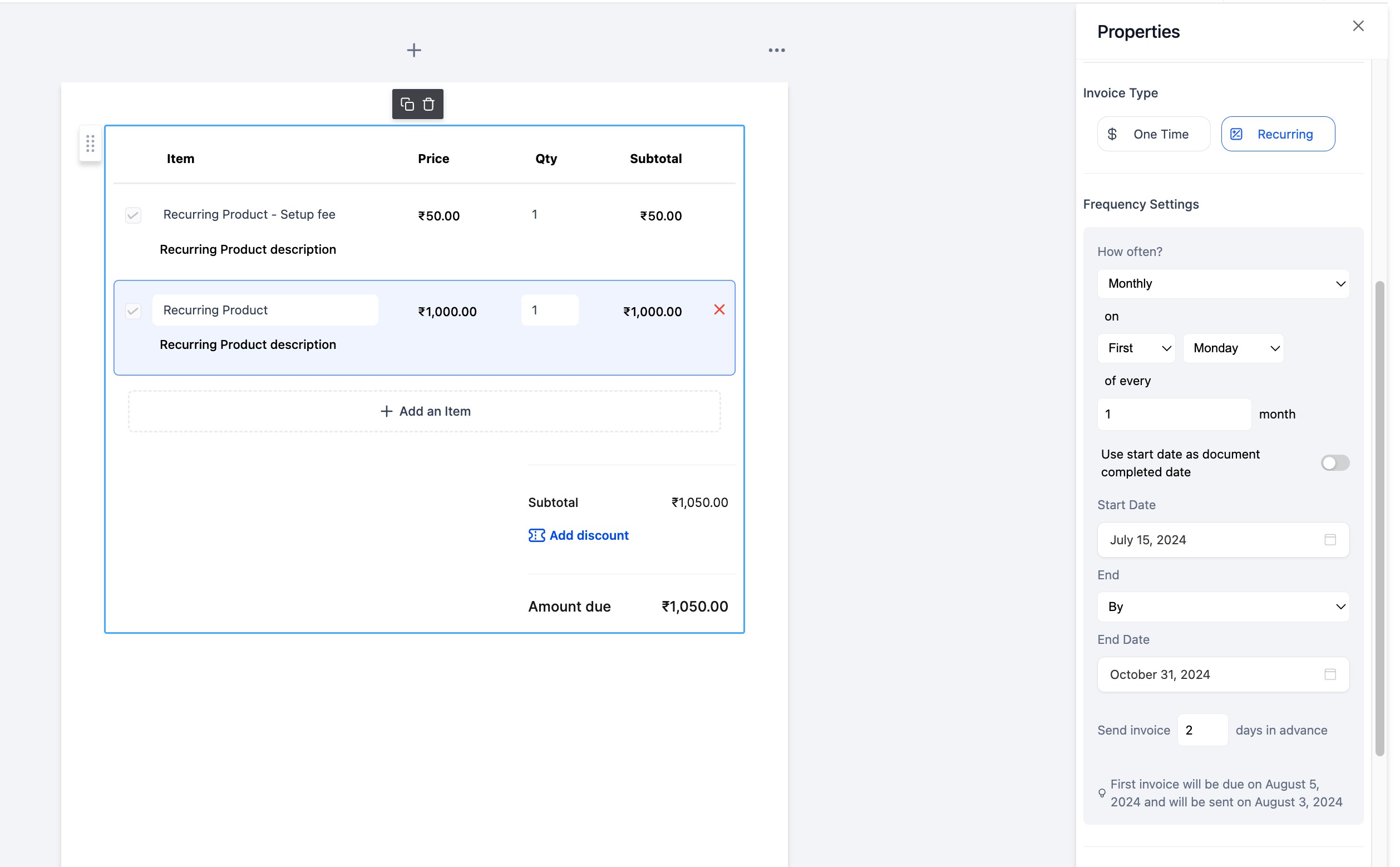
- In the product list properties, add a recurring schedule
- Set the invoice start date to either:
- Document completed date — invoicing begins when the family signs
- Custom date — invoicing begins on a specific date you choose
- Save your template
What Happens After Families Sign
Once a family completes the contract, Enrollio automatically sends the first invoice. If you included at least one recurring product, invoicing continues on your schedule. Setup fees appear as separate line items so families can see exactly what they're paying.
Why This Matters
Before this feature, you couldn't include recurring products in contracts—which meant extra steps to set up billing after enrollment. Now everything happens in one flow: families sign the contract, and recurring invoicing starts automatically.
Coming Soon
We're working on even more payment features for contracts:
- 2-in-1 contracts — show the invoice immediately after the primary signer completes the contract
- One-time deposits — collect a percentage of the total as a deposit when the contract is signed