
What is CNAM?
CNAM (Caller ID Name) is a technology that displays your business name alongside your phone number when you call families. Instead of parents seeing just a random number like +1 (555) XXX-4XX7, they'll see your center's name—which helps build trust and increases the chances they'll actually answer.
While CNAM won't prevent spam labeling, it does provide more accurate caller information and can improve your answer rates when it works correctly.
How CNAM Works
When you make an outbound call, only your phone number is transmitted. The parent's phone carrier then looks up your number in a CNAM database to find the matching name and display it on their device.
Here's the challenge: these databases are fragmented and managed independently by different carriers. This creates data inconsistencies and coverage gaps, which is why CNAM doesn't always work reliably.
Setting Up CNAM
Getting started is straightforward:
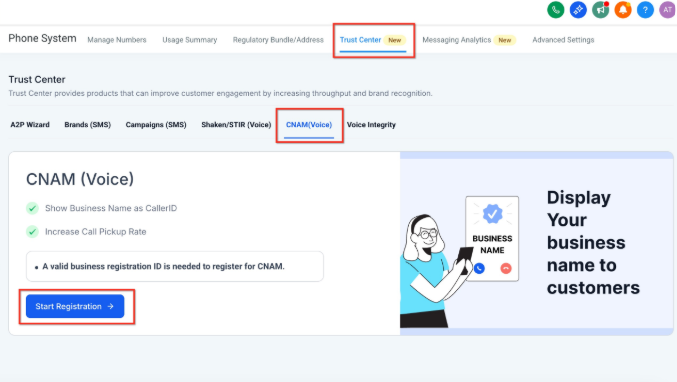
- Go to Settings Phone Numbers Trust Center CNAM (Voice)
- Start the registration process
- Complete your business verification
Who Can Register?
Any entity with a valid business registration number can sign up for CNAM, including:
- Sole proprietors with an EIN
- Registered childcare businesses
- Multi-location childcare organizations
Important: An EIN (Employer Identification Number) is required, whether you're running a single center or multiple locations.
Where CNAM Is Available
CNAM is currently supported only in the United States. However, even within the U.S., coverage is limited—working reliably in less than 20% of cases. This means some parents won't see your business name even after you've registered.
Why CNAM Doesn't Always Work
There are several reasons why parents might not see your business name:
Data Inconsistencies
Phone carriers pull data from one of eight different CNAM databases, often choosing the cheapest option. This creates reliability issues—outdated or incorrect data may be displayed instead of your current business name.
Limited Mobile Support
CNAM works more reliably on landlines. For mobile phones, it's often a premium feature that parents must pay extra for. Since most mobile devices already display contact names saved in the phone, carrier adoption is limited. As a result, CNAM works on fewer than 20% of mobile devices.
Carrier Requirements
Not all carriers support CNAM. Even when they do, the parent must have a phone plan that includes CNAM lookup—which is often a paid upgrade, especially on mobile plans.
Our Commitment to Improving CNAM
At Enrollio, we recognize CNAM's limitations and we're actively working to make it more reliable and effective for childcare centers. Our goal is to reduce inconsistencies, expand coverage, and give your calls a better chance of being answered.
By investing in CNAM improvements, we're committed to helping you build stronger trust with families and improve connection rates—one call at a time.
Frequently Asked Questions
How reliable is CNAM today?
CNAM coverage is currently limited—working reliably in less than 20% of U.S. cases. This means many parents will only see your phone number, not your registered business name.
Does CNAM work on mobile phones?
Not consistently. CNAM is more common on landlines. On mobile phones, it's often a premium feature. Since most mobile users already see names from their contact list, CNAM adoption among mobile carriers is low.
Can CNAM prevent my calls from being marked as spam?
No. CNAM only displays your business name—it doesn't control whether your number gets flagged as spam. To maintain a good caller reputation, follow best practices like avoiding rapid-fire calls and ensuring you have permission to contact families.
Should I still register for CNAM if coverage is limited?
Yes. Even with limited coverage, CNAM can help improve answer rates when it does work. It's one layer of trust-building alongside other practices like texting before calling and maintaining consistent communication with families.